Friday, 14 March 2014

Iron deficiency increases stroke risk by making blood sticky

More than 15 million people worldwide suffer a stroke every year, resulting in almost 6 million deaths. Now, new research from Imperial College London in the UK finds that iron deficiency could increase a person's risk of stroke by making the blood sticky.

The research team notes that previous research has shown that iron deficiency could be a risk factor for ischemic stroke - when small blood clots interrupt blood flow to the brain - in adults and children.

To investigate why this is the case, the researchers analyzed the iron levels of 497 patients with hereditary hemorrhagic telangiectasia (HHT) - a rare disease than can lead to enlarged blood vessels in the lungs.

The research team explains that healthy blood vessels usually filter out small blood clots before the blood travels to the arteries. But in HHT, the blood vessels can allow small blood clots to make their way to the brain.

The investigators found that patients with moderately low iron levels (6 micromoles per liter) had double the risk of stroke, compared with patients with iron levels deemed middle of the normal range (7-27 micromoles per liter). Further investigation revealed that iron deficiency increases the stickiness of platelets - small blood cells. This prompts platelets to stick together, causing clotting.

Since platelets in the blood stick together more if you are short of iron, this may explain why being short of iron can lead to strokes, though much more research will be needed to prove this link. The research team plans to investigate whether treating iron deficiency in high-risk patients could reduce their risk of stroke, and specifically, whether this would cause platelets in the blood to become less sticky.

Tuesday, 11 March 2014

“Over diagnosis” may be responsible for rise in thyroid cancer incidence!

According to a new study published increased incidence of thyroid cancer may not be because of an increase in the disease, but an increase in diagnosis. Several types of cancer can affect the thyroid - a gland in the neck that produces hormones. Factors that make people more at risk of getting thyroid cancer include- being between the ages of 25 and 65, being female, being Asian, having a history of thyroid disease in the family and having previously had radiation treatments to the head or neck.

To diagnose thyroid cancer, doctors use a combination of physical exam, blood tests, imaging tests and a biopsy. Since 1975, the incidence of thyroid cancer has nearly tripled, from 4.9 to 14.3 in every 100,000 people.

To assess why there has been an increase in diagnoses of thyroid cancer, the authors behind the new study analyzed the medical records of patients between 1975 and 2009 in Atlanta. Despite the increase in diagnosis, the researchers did not find an increase in the rates of death from thyroid cancer. About 0.5 per 100,000 people die from this cancer, which has remained stable since 1975.

Because of this, the researchers suspected that "over diagnosis" may be responsible for rise in thyroid cancer incidence. Over diagnosis is when a patient is diagnosed with having a condition that has no symptoms and may never cause them any harm. The researchers found that increased detection of small papillary cancers - a less aggressive form of thyroid cancer - is responsible for the increase in thyroid cancer incidence.

As a response to this over diagnosis, the researchers make several suggestions. They think that some of the small papillary cancers may benefit from not being labeled as cancer, and instead of treating the small papillary cancers, monitoring them through active surveillance instead.

Doctors should explain to patients that many of these small cancers will never grow or cause them any harm, the researchers say. The researchers do concede, though, that it is not possible to know in advance which of these diagnosed cancers will continue to be small and not cause symptoms and which will grow to be a threat to the patient's health.

High blood pressure reading in kids linked to triple risk for condition as adults

Children with one or more high blood pressure readings were about three times more likely to develop the condition as adults, in a study presented at the American Heart Association High Blood Pressure Research Scientific Sessions 2013.

After accounting for age, gender and weight, researchers found a direct link between high blood pressure readings during childhood and high blood pressure in adulthood. The rate of high blood pressure during adulthood was 8.6 percent among those who didn’t have high readings as children. The rate rose to 18 percent among those who had at least one high reading during childhood. The rate jumped to 35 percent among those who had two or more high readings during childhood.

The findings suggest even occasional spikes in blood pressure at any age could signal problems later in life and should not be dismissed.

In 1986, researchers began following 1,117 adolescent children who lived in Indianapolis. Blood pressure readings were taken by a school nurse or during a doctor’s office visit, and the children were followed for 27 years. Among the study participants, 119 were diagnosed with high blood pressure as adults. Fifty-nine percent of the adults diagnosed with high blood pressure had been overweight or obese as children. Childhood obesity is a risk factor for high blood pressure and heart disease in adulthood.

This study highlights the need for pediatricians to regularly check blood pressure and weight. An occasional increase in blood pressure does not justify treatment, but it does justify following these children more carefully.

Friday, 7 March 2014

Liver related disorders: Why screening is essential

An average of 35-40 people die every month from liver related disorders in our country. Contrary to the popular belief, even non-alcoholics can acquire deadly liver diseases. There are usually no early symptoms. Doctors say that in more than 90% cases, patients don’t realize that they have a liver disease until it’s late.

There is a major misconception about liver disease- It only affects alcoholics and drug users. Liver disease is not a disease specific to alcohol drinkers. There are more than 100 causes of liver disease. Liver problems can strike anyone, from infants to seniors. Liver disease can be hereditary, caused by toxic substances, viruses and bacteria or an unhealthy lifestyle.

In the early stage of liver disease, liver may become inflamed. However, unlike most other parts of our body that become hot and painful when inflamed, an inflamed liver may cause no discomfort at all. Liver inflammation can slowly worsen, causing scarring or fibrosis to appear. As fibrosis worsens, cirrhosis develops and the liver becomes seriously scarred, hardened and unable to function properly. By the time we experience symptoms such as jaundice, our liver would have been severely damaged.

Major diseases of the liver include autoimmune hepatitis, cirrhosis, cystic disease of the liver, fatty liver disease, gallstones, liver cancer, liver disease in pregnancy, neonatal hepatitis, toxic hepatitis, viral hepatitis A, B& C. Probability of majority of these diseases can be simply screened by performing a full panel liver function test, which indicates how healthy your liver is.

Doctors recommend comprehensive liver checkup once in every 6 months for a normal healthy individual. Liver tests are highly recommended in those with a history of liver disorder in family, people with some sort of life style diseases like diabetes & cholesterol, who lead sedentary life style, who are obese, those who consumes alcohol, under stress, under long term medication etc. Always remember- It’s an organ you could easily trash if you don’t take good care of it, and once you trash it, it’s gone.

Thursday, 6 March 2014

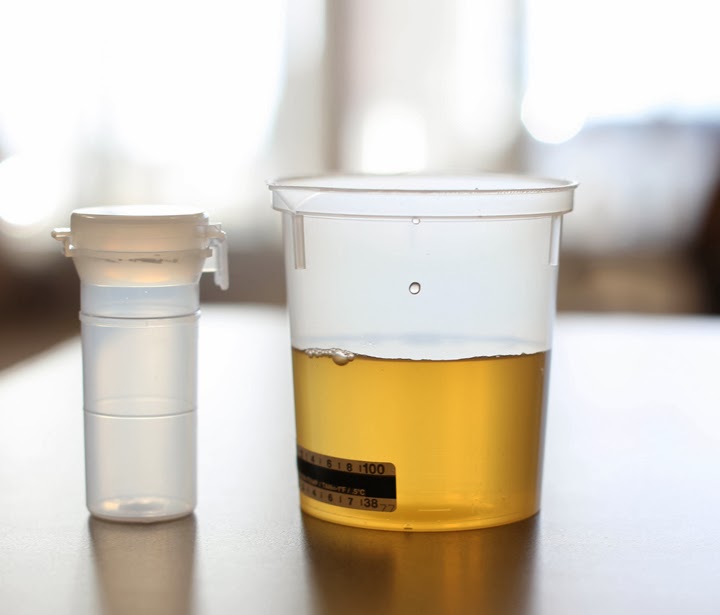
The color of your urine says about health

Urine and urinalysis have, for hundreds of years, been one of the ways physicians have looked at health. From a historical view, urinalysis was one of the original windows into what's happening in the body. That's because many of the substances circulating in our body, including bacteria, yeast, excess protein and sugar, eventually make their way into the urine. Urine is an important part of the body's disposal process. Its job is to remove the extra water and water-soluble wastes the kidneys filter from the blood. It’s important to note that the colour of urine says something abou your health. Before you flush, here are a few urine changes to look out for, and what they might be saying about your health:

Clear: Clear urine means that you are well hydrated possibly due to intake of large amounts of water. It's okey to see that.

Orange: When you eat certain foods like carrots or take certain medications. The outcome may tend to be orange urine. It may indicate that there is an excess of Vitamin C in your system. Which is a good thing, however you could cut down on such food stuffs.

Brown: Brown urine can be caused by certain foods, like fava beans or even laxatives. This colour could be a sign of a serious condition. Liver disease, melanoma cancer and hepatitis can all cause urine to have a brown tinge. You may want to report this to a doctor.

Green: A urinary tract infection (UTI) or certain drugs can cause your urine to look a bit green. Few drugs can actually do that. If your slightly green urine is also accompanied by discomfort or burning while you urinate, there is a problem. So basically, when you see green, please see your doctor.

Blue: I was also shocked that there is blue. Urine with a slight blue tint is an indicator of high calcium levels. You can cut down on calcium food( milk or yoghurt,cheese, almonds) or talk to a doctor about your diet to fix this problem. It could also be caused by certain bacterial infections which your doctor will let you know.

Red: Red urine can be caused by many things. Large amounts of red food dye or naturally red foods can change the color in the toilet. However, red urine could probably be an indication presence of blood-Resulting from internal injuries or bladder infection. You may want to visit your doctor as soon as possible.

Dark yellow: This is an indication of a few things happening in your system. Most commonly it tells you that you not drinking enough water. Curb this by increasing the water intake. It may also indicate jaundice or liver problems. Someone with jaundice has yellow on the whites of their eyes.

Take good care of your bladder, and it will thank you by helping you urinate regularly. To avoid having to make too many bathroom visits, stay hydrated, but not overhydrated. Drink whenever you're thirsty, but don't feel as though you have to adhere to the eight-glasses-a-day recommendation (unless you have kidney or bladder stones, in which case you'll need to increase your fluid intake). If you're getting up during the night to use the bathroom, stop drinking three to four hours before bedtime. Limit caffeine, which can irritate the lining of the bladder. Also watch your intake of alcohol, which can have similar effects.

Tuesday, 4 March 2014

Scientists revive ‘biggest ever’ virus locked in Siberian ice for 30,000 years

A Stone Age virus lying dormant for at least 30,000 years has been ‘successfully’ revived by scientists in Siberia. The newly thawed virus is the biggest one ever found. At 1.5 micrometers long, it is comparable in size to a small bacterium. Tests show that it attacks amoebas, which are single-celled organisms, but does not infect humans or other animals.

The pithovirus sibericum was unleashed from a 100ft deep layer of the Siberian permafrost. Though this virus poses no danger to humans or animals, the discovery has raised fears other more deadly pathogens could be released from the frozen ground. If it is true that these viruses survive in the same way those amoeba viruses survive, then smallpox is not eradicated from the planet - only the surface, Dr Chantal Abergel, a co-author of the report published in the Proceedings of the National Academy of Sciences said. "By going deeper we may reactivate the possibility that smallpox could become again a disease of humans in modern times."

However, it is not yet clear whether all viruses could become active again after being frozen for thousands or even millions of years.

Monday, 3 March 2014

Rising Diabetic Population Drives Demand for Hemoglobin A1c Monitoring

Hemoglobin A1c (HbA1c) monitoring is one of the rapidly growing markets in the diagnostics industry. Hemoglobin A1c test for diabetes monitoring is attracting the attention of healthcare providers and patients alike given its numerous advantages, including the ability to perform tests at any given time in a day without the need for overnight fasting, which is a pre-requisite for traditional oral glucose tolerance test. HbA1c test results also provide physicians with information needed to develop intervention strategies and treatment plans to prevent diabetes-related complications.

With diabetes assuming epidemic proportions, there exists strong potential for diabetes monitoring devices including Hemoglobin A1c blood test kits. Aging population, changing lifestyles, and rising obesity levels are contributing to increased number of diabetics worldwide, particularly in countries such as China, India, the United States, Brazil, Russia, Mexico and Indonesia. The need for effective monitoring of diabetes is driving growth in the HbA1c monitoring market. Increasing patient awareness about the advantages of regular monitoring of blood glucose levels in the prevention and control of diabetes is further expected to enhance the average number of tests being performed, thus translating into favorable opportunities for the HbA1c monitoring market.

As stated by the new market research report on Hemoglobin A1c Monitoring, the United States represents the largest market worldwide. Asia-Pacific is forecast to emerge as the fastest growing regional market. With the number of diabetics continuing to increase owing to rapid urbanization, poor dietary habits, and sedentary lifestyles, developing countries offer favorable opportunities for growth. Growing awareness levels coupled with the test’s ability to identify individuals at high risk of developing diabetes favors market growth. Though high cost remains a concern, the need to conduct HbA1c tests on a quarterly basis as opposed to monthly blood sugar level test will likely act in favor of HbA1c testing and systems.

Segment wise, Laboratory-based HbA1c monitoring represents the largest segment in the global HbA1c monitoring market. Laboratories make use of HbA1c analyzers to provide accurate measurement of HbA1c levels in patients. Though laboratory testing dominates the market, the segment faces stiff challenge from the growing popularity of POC testing. Point-of-Care (POC)-based HbA1c monitoring is poised to grow at fastest with a CAGR of 12% over the analysis period, driven by rising incidence of diabetes, convenience benefits, continuous improvements in test reliability and increasing adoption by physicians.